For decades, young people have been told that success follows a familiar path:
Go to school.
Go to university.
Get a degree.
Start a career.
But what if someone offered you $250,000 to take a different route?
That’s the idea behind the Thiel Fellowship, one of the most unconventional and talked-about opportunities in the world of entrepreneurship and innovation.
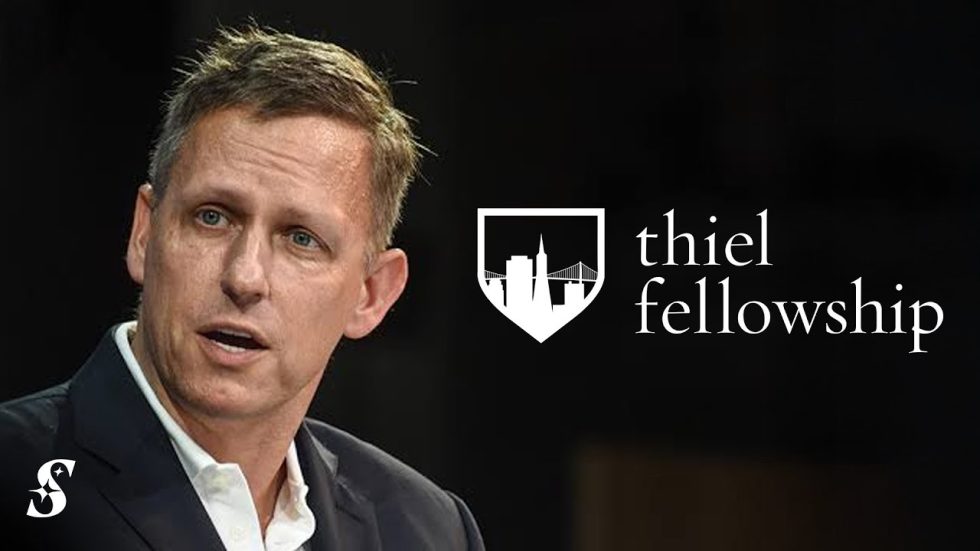
Founded by entrepreneur and investor Peter Thiel, the fellowship supports young people who want to spend two years building companies, conducting research, developing technologies, or pursuing ambitious projects instead of following the traditional university path.
Some people see it as revolutionary.
Others see it as controversial.
Either way, it has become one of the most fascinating opportunities available to young innovators.
What Is the Thiel Fellowship?
The Thiel Fellowship was launched in 2011 by Peter Thiel, co-founder of PayPal and one of Silicon Valley’s most influential investors.
The fellowship was created around a simple belief:
Talented young people should have the freedom to pursue impactful ideas without feeling locked into conventional educational pathways.
Each year, a small group of fellows is selected from around the world and awarded funding, mentorship, and access to a powerful network of entrepreneurs, investors, scientists, and innovators.
The program is highly competitive, with applicants coming from a wide range of backgrounds and disciplines.
What Do Fellows Receive?
Selected fellows receive:
- $250,000 over two years
- Mentorship from experienced entrepreneurs and experts
- Access to a global network of innovators
- Opportunities to connect with investors and industry leaders
- Support while developing projects, companies, or research initiatives
The funding is intended to help fellows focus on their work without the financial pressures that often accompany ambitious projects.
Why Is It Different?
Most scholarships and educational programs are designed to help students attend university.
The Thiel Fellowship does the opposite.
The fellowship encourages participants to focus full-time on their projects rather than pursuing a traditional degree during the fellowship period.
This unusual approach is one reason the program receives so much attention.
It challenges long-standing assumptions about education, careers, and success.
Who Can Apply?
The fellowship is open to young people aged 22 and under.
Applicants may come from various backgrounds, including:
- Technology
- Science
- Engineering
- Entrepreneurship
- Artificial intelligence
- Healthcare
- Social impact
- Research
One of the most interesting aspects of the fellowship is that applicants do not need to already have a successful company.
The program looks for individuals with exceptional potential, strong ideas, and the determination to pursue them.
What Kind of Projects Are Supported?
Fellows have worked on a wide range of initiatives.
Examples include:
- Technology startups
- Artificial intelligence projects
- Medical innovations
- Scientific research
- Educational platforms
- Environmental solutions
The common theme is ambition.
The fellowship seeks people who are attempting to solve meaningful problems or create something new.
Why Is It Controversial?
Not everyone agrees with the fellowship’s philosophy.
Critics argue that university provides valuable knowledge, structure, and networking opportunities that should not be overlooked.
Supporters argue that some individuals learn best by building, experimenting, and creating in the real world.
The fellowship does not claim that university is unnecessary for everyone.
Instead, it offers an alternative pathway for a small group of highly motivated young people.
This debate is part of what has made the Thiel Fellowship so well-known.
Success Stories
Over the years, Thiel Fellows have gone on to build companies, launch innovative products, raise investment, and contribute to research and technological development.
Many have become entrepreneurs, scientists, engineers, and leaders in their respective fields.
While the fellowship does not guarantee success, it provides an environment designed to help ambitious individuals pursue bold ideas.
Is It Worth Applying?
For most people, university remains an important and valuable pathway.
However, for young innovators with a clear vision and a strong desire to build something impactful, the Thiel Fellowship represents a rare opportunity.
It offers funding, mentorship, and access to a network that would otherwise be difficult to obtain.
You may also be interested in:
- How Students Can Work at CERN: Opportunities at the World’s Leading Physics Laboratory
- Oxford’s New Fully Funded Scholarship Backed by a Billionaire- 2027 Now Open!
How to Apply
Applications are submitted through the official Thiel Fellowship website.
Prospective applicants should review the eligibility requirements and application process carefully before applying.
Because application details may change, applicants should always refer to the official website for the latest information.
Final Thoughts
The Thiel Fellowship is not for everyone.
It challenges conventional thinking and encourages participants to take a different approach to learning and building.
Whether you agree with its philosophy or not, one thing is certain:
Few opportunities offer young people the chance to receive $250,000, world-class mentorship, and the freedom to pursue ambitious ideas on their own terms.
For aspiring entrepreneurs, innovators, and problem-solvers, that makes it one of the most unique fellowships in the world.