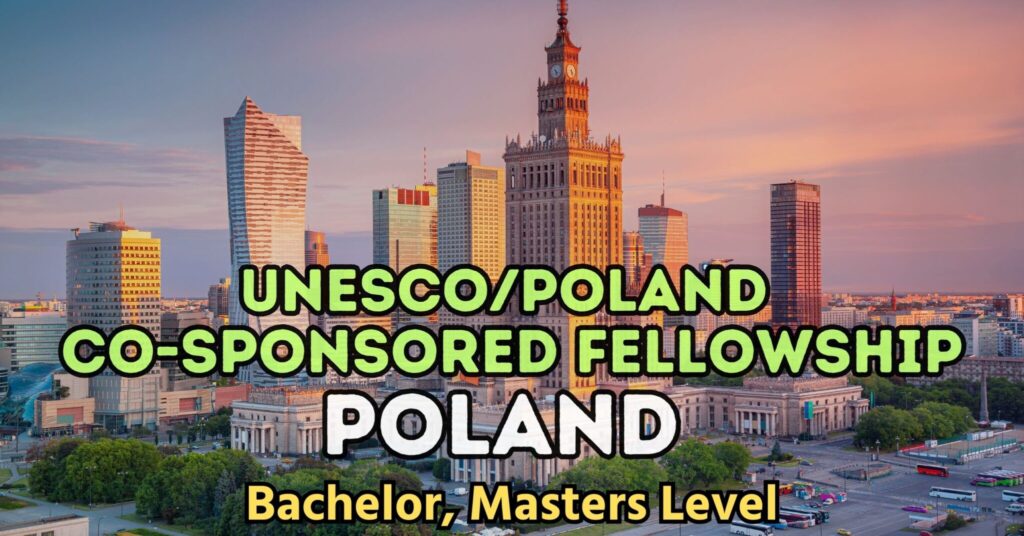
If you’re an African student or young professional in engineering, science, or technology and you’re tired of seeing the same scholarships recycled everywhere, the UNESCO–Poland Engineering Fellowship Programme is one of the most underrated fully funded opportunities still flying under the radar in 2026.
This programme is not mainstream like Chevening or DAAD. It doesn’t attract hundreds of thousands of applicants. Yet it is fully funded, backed by UNESCO and the Polish government, and specifically designed to support candidates from developing countries, including many African nations.
For students who want real technical exposure in Europe without the impossible competition, this fellowship is a hidden gem.
What Is the UNESCO–Poland Engineering Fellowship?
The UNESCO–Poland Engineering Fellowship Programme is an international capacity-building initiative aimed at strengthening engineering and technological expertise in developing countries.
Selected fellows are placed at top public universities and research institutions in Poland, where they receive advanced training in engineering, applied sciences, and technology-focused disciplines.
The programme focuses on practical skills, not just theory. Fellows work in laboratories, research units, and academic departments while gaining exposure to European engineering standards and innovation systems.
Unlike many scholarships that are purely academic, this fellowship is designed to help participants return home with usable skills that can support national development.
Fields of Study Covered
The fellowship supports a wide range of engineering and technical fields, including but not limited to:
- Civil Engineering
- Mechanical Engineering
- Electrical & Electronic Engineering
- Environmental Engineering
- Chemical Engineering
- Information Technology & Computer Engineering
- Materials Science
- Energy & Renewable Technologies
- Applied Sciences and Innovation-related fields
The exact disciplines vary slightly each year depending on host universities, but the focus is always STEM and development-oriented engineering.
Why This Fellowship Is Rare (And Valuable)
This programme stands out for several reasons:
- It is fully funded
- It is not widely advertised
- It prioritizes applicants from developing countries
- Competition is significantly lower than global scholarships
- It focuses on skills transfer, not just certificates
- You study in Europe without needing massive personal funding
Most applicants overlook it simply because it’s not pushed aggressively online, which is exactly why opportunities like this belong on TheOPHub.
What the Fellowship Covers
Successful candidates receive a comprehensive funding package, including:
- Full tuition at the host Polish university
- Monthly living allowance
- Accommodation support
- Medical insurance
- Research and laboratory access
- Local transportation support
- Official certification from UNESCO and the host institution
This means fellows can focus entirely on learning and research without worrying about finances.
Who Can Apply?
This fellowship is ideal for:
- African students and young professionals
- Graduates in engineering or applied sciences
- Early-career researchers
- Public-sector engineers
- Professionals involved in infrastructure, energy, or technology
- Applicants interested in development-focused careers
Basic Eligibility Requirements
- Must be a national of a UNESCO developing member state
- Hold at least a Bachelor’s degree in engineering or a related field
- Be under the age limit specified in the call (usually under 35)
- Strong academic background
- Proficiency in English
- Commitment to return and contribute to home country development
You do not need a PhD. You do not need international experience. Strong motivation matters.
Duration of the Programme
The fellowship typically runs for 6 months, depending on the host institution and field of study.
While short, the programme is intensive, hands-on, and designed to deliver maximum practical exposure in a limited time.
Application Process
The application process is straightforward but competitive.
Step 1: Monitor the Official Call
Each year, UNESCO publishes an official call for applications outlining available fields, host institutions, and deadlines.
Step 2: Prepare Required Documents
Applicants are usually required to submit:
- Completed application form
- Curriculum Vitae (CV)
- Academic certificates and transcripts
- Motivation letter
- Letter of recommendation
- Copy of passport
Step 3: Submit Through Official Channels
Applications are typically submitted via UNESCO National Commissions or designated portals.
Late or incomplete applications are not considered.
You may also be interested in:
- Essential Guide: Affordable Online Degrees You Can Study Anywhere (2026)
- UNICEF Remote Research Internship 2026 (Fully Online) – Now Open for Applications
How to Apply
You must apply through the official UNESCO programme page when the 2026 call opens:
(Always check deadlines and national commission requirements.)
Tips to Strengthen Your Application
- Clearly explain how your field links to development in your country
- Emphasize practical impact, not just academic interest
- Show commitment to returning home after the programme
- Keep your motivation letter focused and honest
- Avoid generic scholarship language
This fellowship rewards purpose and clarity, not flashy CVs.
Final Thoughts
If you’re an African engineer or STEM graduate looking for a real opportunity in Europe without insane competition, the UNESCO–Poland Engineering Fellowship is exactly the kind of scholarship most people miss, and later wish they hadn’t.
It’s credible. It’s funded. It’s practical.
And it’s still open to people who don’t come from elite backgrounds.
That’s why it belongs on TheOPHub